
Uneven Floors: Is It Foundation Settlement, a Structural Problem, or Something Else Entirely?
How Dallas-Fort Worth Homeowners Can Tell the Difference and When to Call a Foundation Professional
You notice a slight tilt when you walk across the living room. A marble rolls on its own when you set it down. Gaps have appeared between your baseboards and the floor, or the tile in your hallway has started to crack along a consistent line. Uneven floors are one of the most commonly reported concerns among homeowners in the Dallas-Fort Worth area, and for good reason. They are rarely just a cosmetic issue, and in a region built largely on highly reactive Blackland Prairie clay, they deserve a closer look.
At Dodson Foundation Repair, we have evaluated and repaired foundations across the DFW Metroplex for years. We know that uneven floors can stem from several different causes, and the right solution depends entirely on understanding which one you are dealing with. Our goal on every inspection is to give homeowners an honest, thorough answer rather than a quick guess, because in foundation repair, the diagnosis matters just as much as the fix.
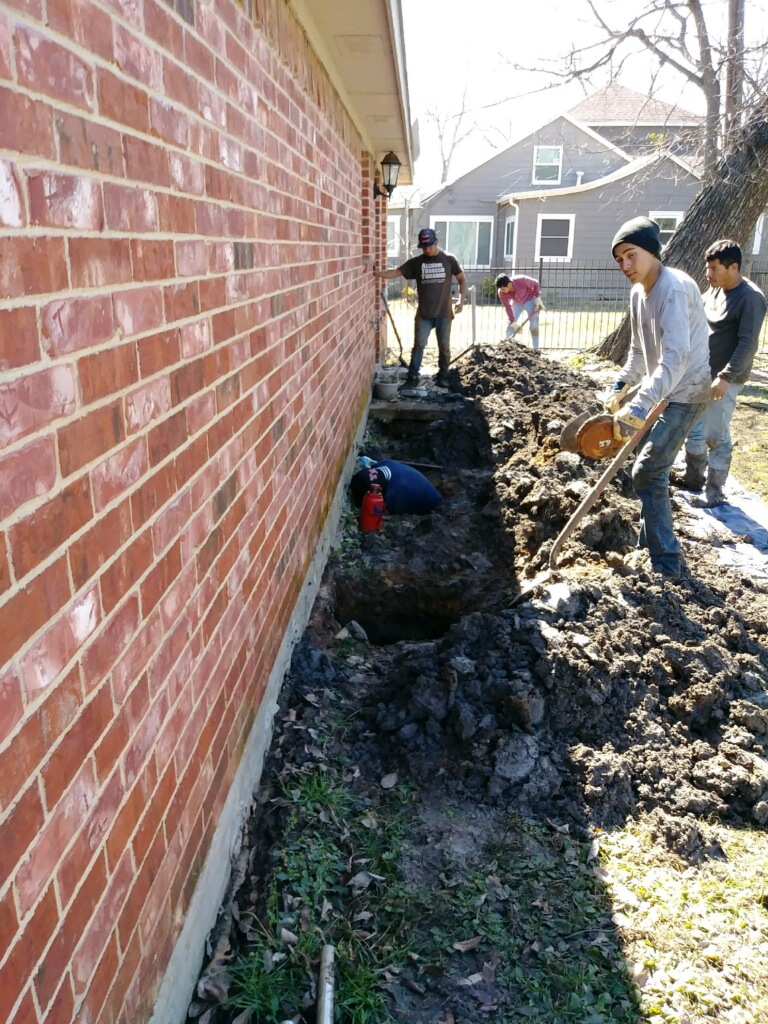
The Three Most Common Causes of Uneven Floors in DFW Homes
Not every sloping floor is a foundation emergency, but none of them should be ignored. Here are the three main culprits our team encounters most often across North Texas:
Foundation Settlement
Settlement happens when the soil beneath your foundation loses its ability to uniformly support the weight of the structure above it. In DFW, this is overwhelmingly caused by the shrink-swell behavior of expansive clay soils. During dry stretches, like the brutal summers across Tarrant and Dallas counties, the clay pulls away from the foundation and voids form beneath the slab. When those areas can no longer carry their share of the load, the foundation drops unevenly. The result above the slab is floors that slope toward the low spots, often accompanied by diagonal cracks at door corners, sticking doors, or gaps where walls meet the ceiling. Settlement that happens evenly across an entire foundation is far less damaging than differential settlement, where one part of the structure sinks more than another. That uneven movement creates the structural stress that leads to the visible symptoms most homeowners notice first.
Foundation Upheaval
Upheaval is the less-discussed counterpart to settlement, and it is just as significant. Rather than sinking, part of the foundation is being pushed upward, usually by soil that has become oversaturated with moisture. In DFW, this often happens after a wet spring following a prolonged drought, when clay that contracted during dry months rapidly reabsorbs water and expands with considerable force. Slab leaks from underground plumbing are another common trigger. Upheaval creates floors that feel raised or humped in certain areas, and it can crack tile, buckle hardwood, and stress wall framing in ways that look deceptively similar to settlement but require a completely different repair approach.
Structural Framing Issues
Not every uneven floor originates at the foundation level. In pier-and-beam homes, which remain common in older Dallas and Fort Worth neighborhoods, the wooden floor joists and support beams that sit above the foundation can deteriorate over time. Moisture intrusion, wood rot, inadequate ventilation in the crawl space, or pest damage can weaken these structural members and cause floors to sag, bounce, or slope independently of what is happening at the foundation itself. This distinction matters a great deal because the repair strategies for framing issues and foundation movement are entirely different.
How to Read the Clues Your Home Is Giving You
The pattern and location of the symptoms matter enormously when diagnosing uneven floors. Here is what to pay attention to before your professional inspection:
- Direction of the slope. A floor that slopes consistently toward one corner or side of the home often points to settlement in that area. Floors that seem high in the middle and lower toward the perimeter can indicate upheaval.
- Cracks in accompanying surfaces. Diagonal cracks running from the corners of door frames or windows are a classic sign of differential settlement. Cracks that run horizontally across walls or along mortar joints in brick veneer suggest different types of movement.
- Door and window behavior. Doors that stick at the top or drag along the floor suggest the frame is racking due to foundation movement beneath them. A slope drop of more than one inch over twenty feet is generally considered the threshold where the issue becomes noticeable and potentially problematic when selling the home.
- Bouncy or soft floors. If the floor gives underfoot or feels springy in localized areas, the issue is more likely in the structural framing above the foundation rather than the foundation itself.
- Cracked or lifted floor finishes. Tile cracks that follow a straight or diagonal path across a room are strongly associated with slab movement beneath them. Cracks that appear randomly or fan outward from a single point may indicate impact damage rather than foundation shift.
A quick field test: place a round object like a golf ball or marble on the floor in different parts of the room. If it rolls consistently toward one side, you have a measurable slope worth having professionally evaluated. A professional elevation survey using a zip level or optical instrument can measure the precise degree of differential movement across your slab.
Why DFW’s Climate Makes This Harder to Predict
Part of what makes foundation diagnosis in the Dallas-Fort Worth area uniquely challenging is that the same home can look significantly different depending on the season. During an extended dry period, clay soils shrink and gaps form beneath the slab, causing doors to stick and floors to slope more noticeably. After heavy rains saturate the ground, the soil re-expands and some of that movement temporarily reverses, only to repeat the cycle with the next dry stretch.
This seasonal fluctuation is why homeowners sometimes notice their floors seem to improve after rain and worsen in summer. It is not the foundation healing itself. It is the soil temporarily closing the gaps that caused the problem, while the underlying conditions that created those gaps in the first place remain unchanged. Over years and decades, each cycle accumulates. Older homes in established DFW neighborhoods have often absorbed thirty, forty, or fifty years of this movement, and the cumulative effect is what produces the more significant differential settlement that requires professional repair.
What a Professional Foundation Inspection Actually Tells You
A proper foundation inspection does far more than confirm that your floors are uneven. It tells you why, where the movement originated, how active it currently is, and what repair approach will address the root cause rather than just the visible symptoms.
At Dodson Foundation Repair, our inspections include an elevation survey of the slab, a review of drainage conditions around the foundation perimeter, an assessment of any plumbing vulnerability that could be contributing to soil moisture changes, and a detailed look at the interior and exterior symptoms. We document everything clearly and explain our findings in plain language, because homeowners should understand what is happening beneath their home before they agree to any scope of work.
Foundation problems do not resolve on their own, and in North Texas, where the soil is always working against the structure above it, waiting typically means watching a manageable repair become a significantly more expensive one.
Are your floors sloping, cracking, or feeling uneven? Do not guess at the cause. Contact Dodson Foundation Repair today to schedule a professional inspection for your DFW home. We will give you straight answers, a clear diagnosis, and repair options tailored to your specific situation. Call us now or visit our website to book your evaluation.