
How Can Landscaping Help Prevent Foundation Damage?
Landscaping can help prevent foundation damage by directing water away from the home, maintaining more consistent soil moisture, controlling erosion, and keeping large trees an appropriate distance from the foundation. Proper grading, drainage, irrigation, and plant placement can reduce extreme moisture changes in the soil, which may contribute to foundation movement over time.
At Dodson Foundation Repair, we know that protecting a home’s foundation involves more than responding to cracks after they appear. The way homeowners manage the landscape around their property can influence drainage and soil conditions near the foundation. With more than 40 years of foundation repair experience, our team has seen how water, soil movement, tree placement, and poor drainage can contribute to foundation concerns. Thoughtful landscaping cannot prevent every foundation problem, but it can help create better conditions around your home. A few smart landscaping decisions today may reduce the risk of moisture-related foundation problems and help homeowners recognize potential issues before they become more serious.
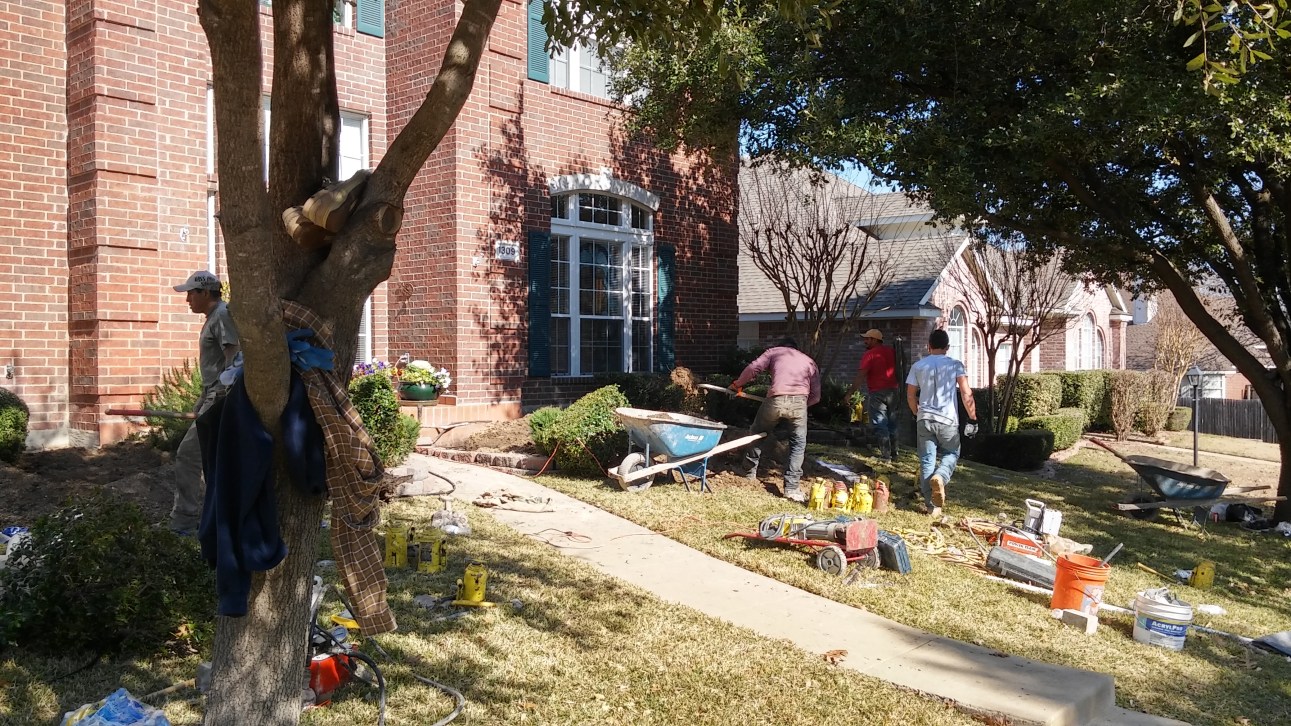
Landscaping Around Your Foundation: What Homeowners Should Know
The most foundation-friendly landscaping practices focus on managing water and soil moisture. Water should generally move away from the house instead of collecting near the foundation, while landscaping should avoid creating dramatic wet and dry zones in the surrounding soil.
This is especially important in areas with expansive clay soils. According to Texas A&M AgriLife, clay soils swell when wet and shrink when dry, and these changes can place stress on foundations.
Here are several landscaping practices homeowners can use to help protect their foundations.
How Should Your Yard Be Graded Around the Foundation?
Your landscape should slope away from the house so rainwater naturally moves away from the foundation instead of pooling beside it.
Improper grading can allow water to collect near the home’s perimeter. Over time, excess water can contribute to soil erosion, moisture problems, and changes in soil conditions around the foundation.
University of Illinois Extension recommends that the final soil grade around foundation walls have at least a 4 percent slope away from the house. Federal manufactured-home drainage standards provide another useful benchmark, requiring surface drainage to slope at least one-half inch per foot away from the foundation for the first 10 feet.
Homeowners should watch for:
- Standing water after rain
- Low spots near the foundation
- Soil that slopes toward the house
- Areas where mulch or soil blocks normal drainage
- Erosion that changes the grade around the home
If you regularly notice water pooling close to the house, it may be time to evaluate your drainage and grading.
Can Gutters and Downspouts Protect Your Foundation?
Yes. Properly functioning gutters and downspouts can help protect your foundation by moving roof runoff away from the home’s perimeter.
A roof can collect a significant amount of water during a storm. When gutters are clogged, damaged, or missing, that water may fall directly beside the foundation. Downspouts that empty too close to the home can create a similar problem.
Virginia Cooperative Extension recommends directing downspout runoff about 10 feet away from the foundation and into the landscape where conditions allow.
Good gutter and downspout maintenance includes:
- Cleaning leaves and debris from gutters
- Checking gutters for leaks or sagging
- Making sure downspouts remain connected
- Using extensions when needed
- Directing runoff toward an appropriate drainage area
- Checking for erosion where downspouts discharge
After a heavy rain, walk around your property and observe where the water goes. This simple inspection can reveal drainage problems that are easy to overlook during dry weather.
How Close Should Trees Be to Your Foundation?
Large trees should be planted far enough from the home to allow their roots and canopy to mature without creating unnecessary concerns near the foundation.
Tree roots do not automatically damage a structurally sound foundation simply because a tree is nearby. However, large trees can remove significant amounts of moisture from surrounding soil. In expansive soils, uneven drying may contribute to soil movement.
The U.S. Department of Agriculture’s Natural Resources Conservation Service has advised that, in areas with expansive soils, trees should be planted no closer than 15 feet from foundations, with 25 to 30 feet being preferable.
When planning new landscaping:
- Consider the tree’s mature size, not its size at planting
- Research the expected root spread
- Avoid planting large species immediately beside the home
- Consider smaller trees or shrubs in tighter spaces
- Consult an arborist before removing an established mature tree
Tree removal can also change soil moisture conditions, so removing a large tree solely because it is near the house may not always be the best first step.
Can Watering Your Landscaping Affect the Foundation?
Yes. Irrigation can affect soil moisture around a foundation, particularly in clay-heavy soils.
The goal is to avoid extremes. Overwatering can saturate soil and create drainage problems, while prolonged dry conditions can cause expansive clay soil to shrink. Repeated cycles of significant swelling and shrinking may contribute to foundation movement.
Homeowners can promote better moisture management by:
- Checking sprinkler heads for leaks or misalignment.
- Avoiding excessive watering directly against the foundation.
- Adjusting irrigation based on rainfall and seasonal conditions.
- Watching for unusually dry or saturated areas around the home.
- Repairing leaking irrigation lines promptly.
Texas A&M AgriLife notes that heavy clay soil can expand when wet and contract when dry. Keeping landscape irrigation well managed can help avoid unnecessary moisture extremes.
What Plants Are Best Near a Home’s Foundation?
Smaller plants with manageable water requirements are generally better choices close to the home than large, thirsty trees.
Foundation landscaping should complement proper drainage rather than interfere with it. Dense vegetation, raised planting beds, or excessive mulch can sometimes trap moisture near exterior walls or alter the grade.
When designing beds around your house:
- Choose plants appropriate for your soil and climate
- Consider drought-tolerant varieties where appropriate
- Avoid overwatering foundation beds
- Do not pile mulch or soil excessively against the house
- Maintain the landscape’s slope away from the foundation
- Regularly inspect irrigation lines hidden by plants
Groundcovers and healthy vegetation can also help reduce erosion. Colorado State University Extension notes that perennial groundcovers and turf can help slow surface runoff and minimize soil erosion on sloped areas.
The goal is not to eliminate landscaping around your home. It is to create attractive landscaping that also manages water responsibly.
Frequently Asked Questions About Landscaping and Foundations
Can landscaping cause foundation problems?
Landscaping can contribute to foundation concerns when it causes poor drainage, excessive irrigation, erosion, or major differences in soil moisture. Proper landscape planning can help manage these conditions.
Should I put rocks or mulch around my foundation?
Either may be appropriate depending on the landscape design, but the material should not interfere with drainage or change the grade so water flows toward the house. Avoid piling mulch, soil, or decorative material against exterior walls.
How far should water drain away from a house?
Water should be directed away from the foundation and toward an appropriate drainage area. Virginia Cooperative Extension recommends directing downspout runoff about 10 feet away from the foundation where site conditions permit.
Can tree roots damage a home’s foundation?
Tree roots can affect soil moisture and may contribute to movement in certain soil conditions, but a nearby tree does not automatically mean foundation damage will occur. Tree species, size, distance from the home, soil type, and foundation condition all matter.
Protect Your Landscaping and Your Foundation
Good landscaping is not just about curb appeal. How you manage grading, drainage, irrigation, trees, and planting beds can influence the soil conditions surrounding your home.
Keep water moving away from the foundation, avoid extreme moisture conditions, monitor large trees, and pay attention to changes in your yard after heavy rain or prolonged dry weather. If you notice foundation warning signs such as growing cracks, sticking doors, uneven floors, or separation around windows and walls, an evaluation can help determine what is happening.
With more than 40 years of experience, Dodson Foundation Repair can help you understand your home’s foundation and identify the right next steps.
Concerned that drainage, landscaping, or soil movement may be affecting your home? Contact Dodson Foundation Repair today to schedule a foundation evaluation and get answers from an experienced team.